PTCA & peripheral catheters
Precision tubes, short sections and sleeves for catheter assemblies. Define the bore, wall, length and interfaces that must fit the complete device.

Precision in application
Precision alloy capillary tubes and micro-components for medical devices and electronic systems. The application defines the material, the geometry and the details that matter.
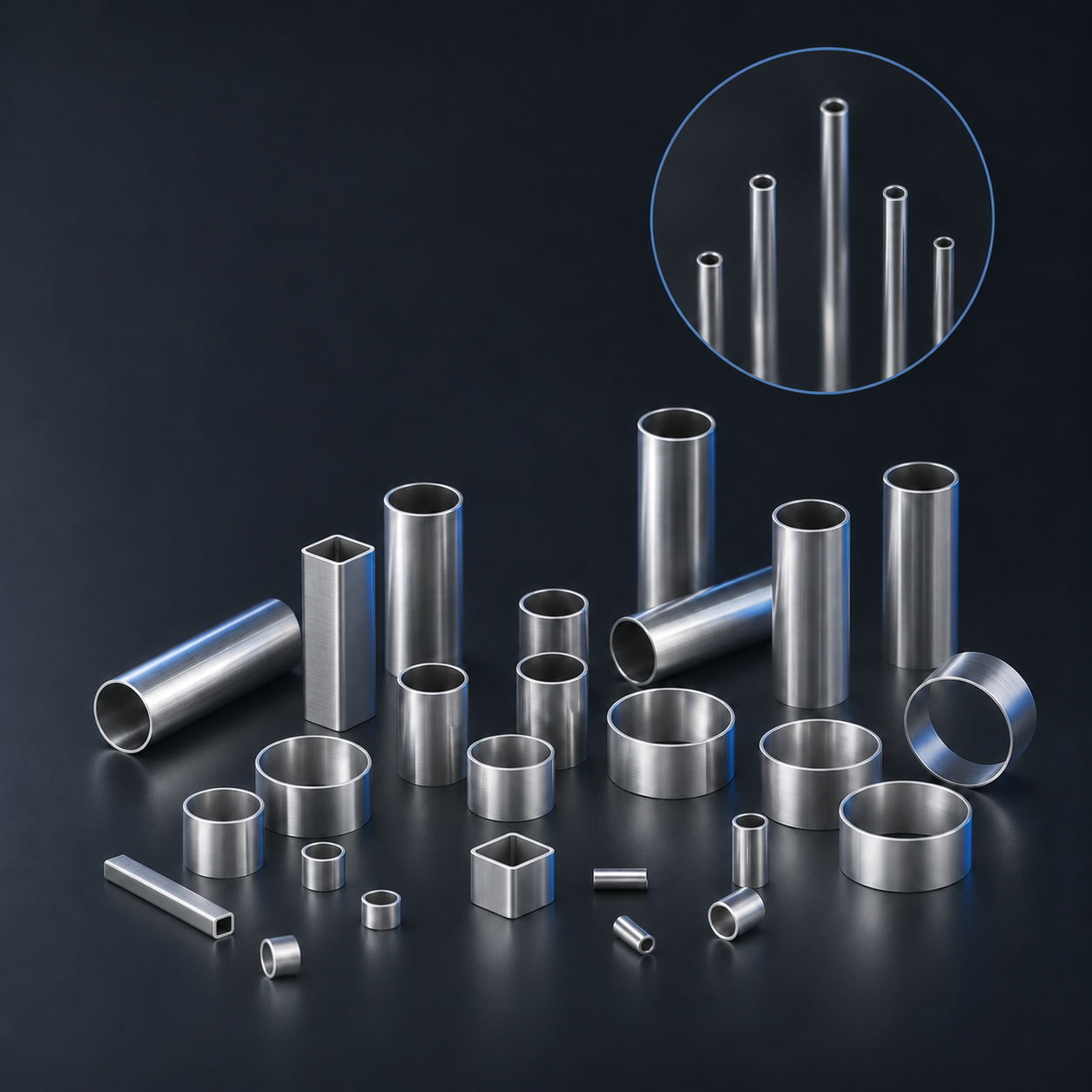
From tube to device component
Custom metal tubing and tube-based parts for catheter systems, cardiovascular device components and endoscopic instruments. We work from your component drawing, material specification and downstream processing requirements.
Precision tubes, short sections and sleeves for catheter assemblies. Define the bore, wall, length and interfaces that must fit the complete device.
Fine tubing and small components where compact geometry is central to the design. Specify critical dimensions, surface condition and end requirements together.
Drawing-based tubing for device-component programs, including stent-related development. Material condition and subsequent processing are reviewed before supply.
MingQuan manufactures tantalum marker bands to customer drawings for catheter and interventional-device assemblies.
Specifying platinum–iridium? Explore Pt90Ir10 tubing ↗
We select SUS 304L and SUS 316L raw material for medical-device tubing, with close dimensional control and smooth surfaces free from oxide scale. Corrosion resistance and biocompatibility requirements are assessed for the intended device and its processing conditions.
To customer requirements, MingQuan can coordinate the following operations within one component program:
These finish capabilities apply to the SUS 304L / SUS 316L medical tubing described here. The achievable finish, measurement requirements and processing scope are confirmed against the drawing. Cleaning and packaging do not imply sterile supply or finished-device approval.
Material options are starting points for specification review, not interchangeable approvals. Biocompatibility, imaging visibility, attachment integrity and finished-device performance must be validated for the intended device.
Geometry that serves the system
Precision tubes and cut-to-length components for semiconductor and integrated-circuit packaging. Invar 36, Kovar and Alloy 50 are key material options, selected around the thermal response, mating parts and manufacturing requirements of the assembly.
Invar 36 is a low-expansion option for precision components where temperature-related movement matters. Specify the operating temperature range and dimensional stability requirements.
Invar 36Discuss pure nickel tubing for components where electrical conductivity and corrosion behavior are part of the material brief. Pure nickel is a separate material family, not a controlled-expansion alloy.
Pure NickelCustom tube sections and sleeves made around mating-part dimensions. Identify the bore, outer diameter, end geometry and surface requirements that control assembly fit.
Custom tubingMingQuan uses cold rolling, cold drawing, bright annealing and leak-tightness testing to produce long tubes with close control of internal and external dimensions. CNC cutting and precision polishing then turn the tubes into short components. This manufacturing scope supports electronic packaging in Invar 36, Kovar and Alloy 50, as well as our other product materials.
Surface and end requirements for electronic packaging parts:
These manufacturing capabilities are shared across our product range, not limited to electronic-packaging alloys. Dimensions, finish and tolerances are reviewed together for the selected material and drawing; not every combination of the listed limits is available. The typical ±0.1 mm length tolerance applies to cut short parts, not to every tube length. Leak-test method, coverage and acceptance criteria are agreed for the tube; finished-assembly hermeticity requires separate verification.
The interface is a material system
For glass-to-metal and other sealing assemblies, the goal is compatible thermal expansion—not simply the lowest expansion. Review the tube alloy with the mating material, joining process and temperature cycle.
Precision tubing for matched-expansion sealing interfaces in electronic assemblies. Specify the mating glass or ceramic and the required material condition.
Fe–Ni / CONTROLLED EXPANSIONIron–nickel tubing for applications requiring a defined expansion response. Confirm the exact grade and its compatibility with the selected sealing system.
Glass, ceramic or metal designation and contact geometry.
Joining conditions, operating range and thermal cycling.
Alloy condition, ID / OD, wall, surface and end details.
Customer-defined leak-rate and durability criteria for the finished seal.
Our scope here is the precision tube or component. A tube material does not itself guarantee a hermetic assembly; sealing-process development and finished-assembly verification remain separate requirements.
A clear brief. A better starting point.
Whether you are developing a new component or defining a production part, share the requirements that determine how the tube must perform in your assembly.
Operating environment, mating parts, contact conditions and intended function.
Material specification, supply condition and any mechanical acceptance criteria.
ID, OD, wall, length or band width, tolerances, surface and end requirements.
Inspection method, documentation, traceability, quantity and downstream processing.
Overall tube diameter capability of 0.3–20 mm, with core expertise below 6 mm. ID and OD tolerances of ±0.005 mm are available on selected capillary sizes only, subject to drawing review.
ISO 9001 & ISO 13485 quality systems. Application-specific controls and material traceability, supported by technical specialists with more than 20 years of industry experience.
Quality & traceability ↗Start with your application
Tell us what the component needs to do. Send a drawing and the material requirements so we can review a suitable manufacturing scope.