Define the condition
Identify L605, the purchasing specification and supply condition. Define mechanical properties and verification requirements where needed.

Cobalt alloy tubing
Custom cobalt–chromium–tungsten–nickel capillary tubes for medical and precision components. Thin-wall geometry, material condition and traceability, defined around your design.
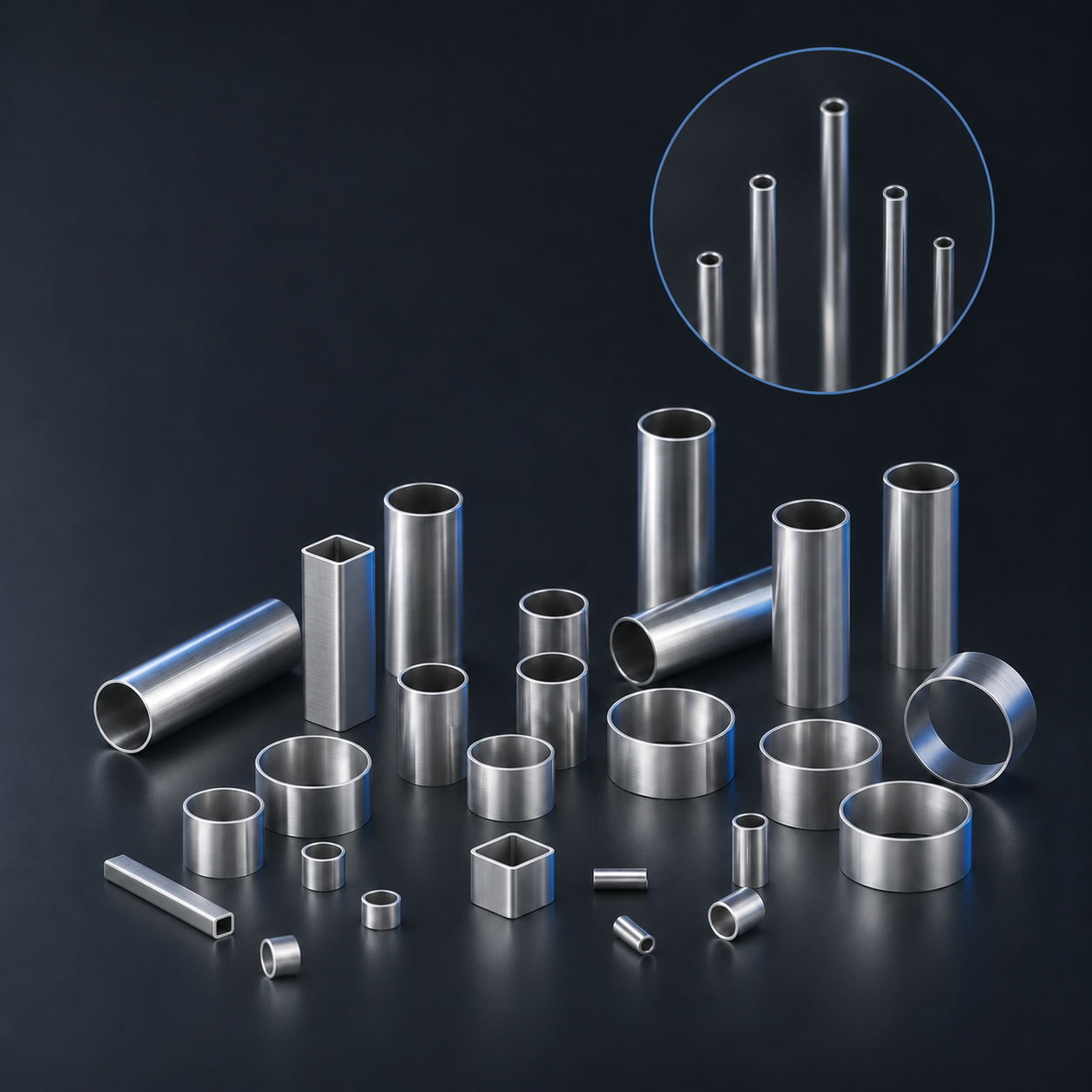
*Company-wide manufacturing capability, not a guaranteed range for every L605 tube. Dimensions and tolerances are confirmed against the complete drawing and material requirements.
Cobalt alloy. Clearly defined.
L605, also written L-605, is a cobalt–chromium–tungsten–nickel alloy identified as UNS R30605. It is a different grade from MP35N.
Cold work and annealing affect the balance of strength and ductility. Define the required supply condition and acceptance criteria alongside the tube geometry.
Co–Cr–W–Ni alloy · UNS R30605
Composition limits follow the agreed material specification.
Will the tube be laser-cut, formed or electropolished after delivery? Share the planned operations, required surface condition and mechanical acceptance criteria so the supply specification supports your next step.
“Cobalt chrome” alone is not a complete purchasing specification. Identify L605 / UNS R30605, the applicable material requirements, supply condition and required documentation.
Thin walls. Defined requirements.
MingQuan reviews L605 capillary tubes, thin-wall tube sections and related micro-components against customer drawings. Bore size, wall consistency, surface condition and end geometry are considered together.
Our technical specialists bring more than 20 years of industry experience, with core production expertise in ultra-fine tubing below 6 mm.
Identify L605, the purchasing specification and supply condition. Define mechanical properties and verification requirements where needed.
Provide ID, OD, wall and length, with wall variation, roundness or concentricity limits where they are critical to the design.
Describe subsequent cutting, forming or finishing. Agree surface, end and cleanliness requirements at the tube-supply stage.
A fine bore does not require a fixed wall ratio. Specify the inner diameter and wall that your design needs; thin-wall feasibility is reviewed against the complete geometry and material condition.
Send your requirements →*L605 feasibility depends on material condition, diameter, wall, length and inspection criteria. A specific size, tolerance or mechanical property is confirmed during quotation, not implied by the overall capability range.
MingQuan uses cold rolling, cold drawing, bright annealing and leak-tightness testing to produce long tubes with close control of internal and external dimensions. CNC cutting and precision polishing then turn the tubes into short components.
Long tubes have smooth inner and outer surfaces free from oxide scale. Cut components have burr-free openings and no obvious surface damage under 20× magnification.
This manufacturing scope is shared across our product range. The production route, achievable size combination, surface finish and inspection requirements are confirmed for the selected material and drawing. The typical ±0.1 mm length tolerance applies to cut short parts; it is not an ID / OD tolerance. Leak-test method, coverage and acceptance criteria are agreed for the tube. Tube testing does not by itself qualify a completed sealed assembly.
From tube stock to device components
L605 is used in cobalt-alloy stent designs. Discuss starting-tube requirements for your development program, including wall dimensions, material condition and the planned downstream process.
Custom sleeves, cut lengths and tube-based micro-components for assemblies that specify L605. Match the bore, outer diameter and end geometry to the surrounding parts.
This page describes tubing and component supply, not finished stents. Downstream processing and finished-device verification, biocompatibility and regulatory requirements remain part of the device manufacturer’s qualification program.
Defined before production
Alloy designation, customer specification and supply condition established before production.
Critical dimensions, tolerance definitions and inspection requirements taken from the drawing.
Material identification and traceability maintained throughout production, with documentation requirements agreed at quotation.
ISO 9001 and ISO 13485 quality management systems, with controls matched to the application.
Before you specify
No. L605 is a cobalt–chromium–tungsten–nickel alloy, UNS R30605. It is not interchangeable with MP35N. A drawing that specifies “cobalt chrome” should be clarified before a grade is selected.
Base the condition on the required properties and planned processing. Annealed and cold-worked material have different strength and ductility. Include relevant strength, elongation or hardness limits and test requirements in the inquiry.
Yes. Send the starting-tube drawing, material specification and downstream processing requirements for feasibility review. Tube supply does not include a finished or approved stent; any additional processing must be agreed separately.
No single wall thickness suits every L605 tube. ID, OD, wall, length and material condition must be reviewed together. The ±0.005 mm ID / OD tolerance is available on selected capillary sizes only, not a guarantee for all L605 sizes.
Your L605 tube project
Send the tube drawing, L605 material requirements and planned downstream operations. We will review geometry, condition and inspection needs before confirming the supply scope.